Check Your Shampoo for Cleaner and Healthier Hair
We all want beautiful clean hair, but it shouldn’t come at the cost of disrupting hormones or using carcinogenic ingredients.
I tried my best to simplify the list of ingredients to avoid as much as possible. The truth is, there are far too many concerning chemicals allowed in personal care products.

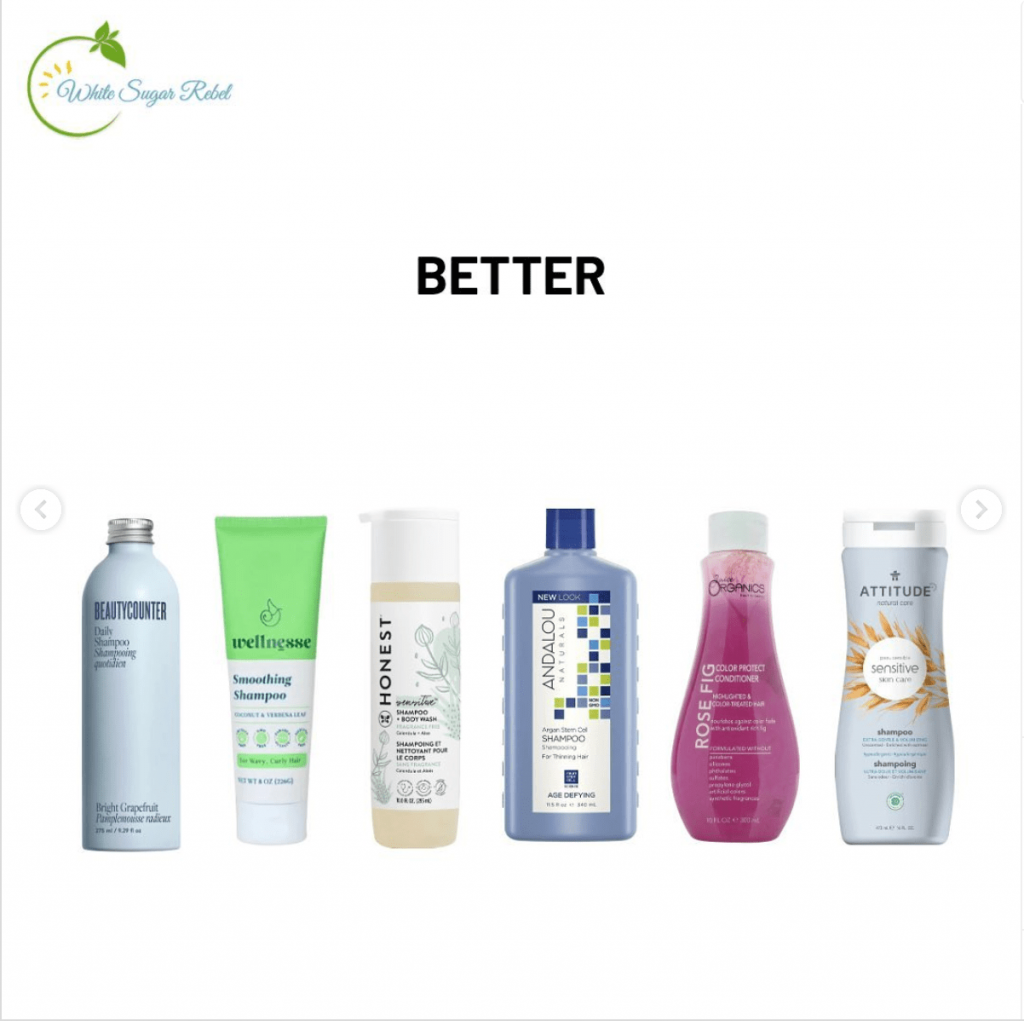
Please see the slides to compare the ingredients in your product if you are concerned about one you are using.

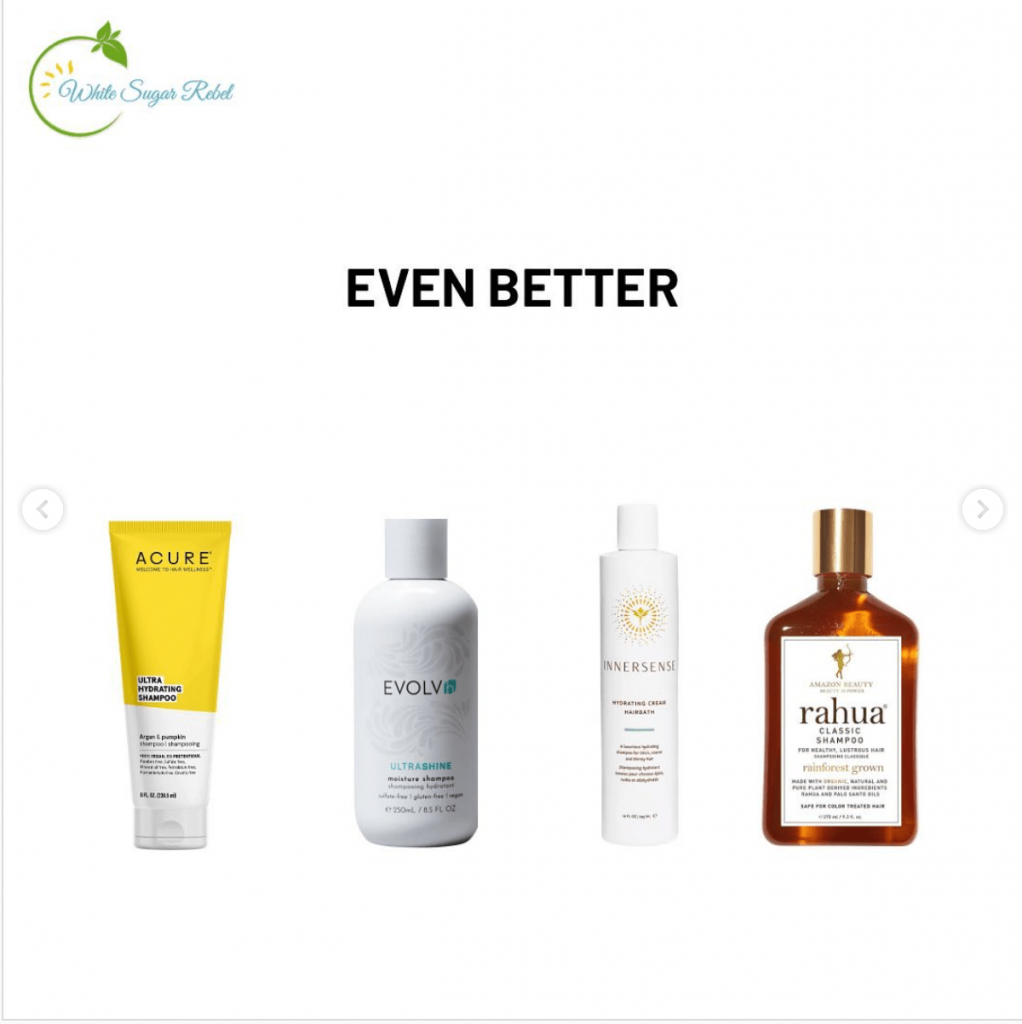

The “Even Better” shampoos contain either cocamidopropyl betaine or cocamidopropyl hydroxysultaine. Although these surfactants are better than others, I did come across some research that states they may be contaminated with nitrosamines. Additionally cocamidopropyl betaine was named allergen of the year in 2004, something to consider if you are allergic. Aside from that, these shampoos did not contain any other concerning ingredients.
Don’t be fooled by terms like “Natural Fragrance” or “Natural Flavors” if the company will not disclose what they are using to create the scent or flavor, I do not recommend using the product. There are over 3000 chemicals allowed in fragrances, be selective in what you accept in your personal care products.
I currently use 100% Pure; you can use the link on my Favorites page if you are interested in that. My daughter uses Carina organics, and my husband likes the Alaffia coconut shampoo (I do not like it for my hair).
Ingredients to avoid:
- ARTIFICIAL DYES– many are derived from petroleum
- BHA/BHT– probable carcinogens
- ETHANOLAMINES– may be contaminated by nitrosamines. Common ones to avoid include Triethanolamine (TEA), Cocamide (DEA/MEA)
- ETHOXYLATED INGREDIENTS– ending with- eth
- FORMALDEHYDE RELEASERS– DHDM Hydantoin diozolidinyl urea, Quanternium-15, imidazolinly urea
- FRAGRANCES– an umbrella term used to describe a chemical mixture using a combination of 3000 chemicals and solvents that include carcinogens, endocrine disruptors, and more.
- METHYLCHLOROISOTHIAZOLINONE
- NETHYLISOTHIAZOLINONE
- PARABENS– thought to mimic estrogen and linked to cancer
- PEGs– derived from petroleum. Some are linked to cancer and developmental toxicity.
- PHENOXYETHANOL– Preservative linked to allergies and possible links to cancer.
- PHTHALATES– endocrine disruptors
- POLYSORBATE 20, 30, 80– may be contaminated with 1,4 dioxane
Are you using a clean shampoo that you absolutely love? Were you surprised by one that was not approved?
References:
https://www.cosmeticsinfo.org/ingredients
https://journals.sagepub.com/doi/pdf/10.3109/10915819109078621#:~:text=Cocamidopropyl%20Betaine%20(CAPB)%20is%20a,conditioners%2C%20and%20other%20cleaning%20preparations.
https://cfpub.epa.gov/ncea/iris2/chemicalLanding.cfm?substance_nmbr=45
https://ntp.niehs.nih.gov/ntp/roc/content/profiles/dioxane.pdf
https://ntp.niehs.nih.gov/ntp/roc/content/profiles/butylatedhydroxyanisole.pdf
https://www.ewg.org/sites/humantoxome/chemicals/chemical_classes.php?class=Parabens