
A Guide to Safe Cookware: Which Materials Are Safe & Healthy
Cookware is an essential tool in any kitchen, but many people are unaware of the potential health risks associated with certain materials. From non-stick coatings to aluminum, some cookware materials can release harmful chemicals or react with acidic foods. In this post, we’ll explore which cookware materials are safe and which ones to avoid. We’ll take a closer look at the benefits of using stainless steel and cast iron cookware. By the end of this post, you’ll have a better understanding of how to choose safe cookware that not only cooks your food to perfection but also keeps you and your family safe.
When shopping for cookware always consider; the type of coating, chemicals used to produce the coating, heavy metals that may leach into food, durability, and quality.

THERE IS NO SAFE NON-STICK Cookware
Although some toxic chemicals have been phased out over the years (links to cancer,
thyroid disruption, developmental delays, and more). Instead of using PFOA, PFOS & PTFE companies are using newer chemicals like GenX and PFBS instead. The truth is we don’t know much about these chemicals. The few animal studies available are finding they are just as bad, if not worse than PFAS chemicals. Try to avoid PTFE. Although it may be PFOA-free, it does not mean it is free of other harmful chemicals (replacements I mentioned above).
The worst cookware:
- Teflon
- Aluminum – leaches aluminum into food (aluminum has been linked to Alzheimer’s and more)
- Silicone – No long-term studies have ever been done. Studies have found that when heating silicone to higher temperatures, a significant amount of siloxanes (potential endocrine disruptors) may leach into food.
- Unglazed clay- may contain heavy metals like lead, aluminum and mercury, arsenic, and others

A little-better options:
Ceramic cookware – although far from perfect, it is a step in the right direction. Ceramic coatings are fragile; they chip and ultimately contaminate food. If you choose to purchase ceramic cookware, it is best to contact the manufacturer and find out what the ceramic coating is made from and ask for heavy metal reports.
Xtrema – claims they are free of heavy metals although a couple of mom blogs did their own heavy metal testing and found they contained lead. See the note on the slide about nanoparticles.
Enameled cookware- similar to ceramic, they are fragile and may leach heavy metals into food. Le Creuset bright colored pots (red, orange, etc) have noted trace levels of lead. If you choose to use enameled cookware, choose lighter colors and possibly test for lead yourself.

I cannot recommend the Zwilling, Caraway, and Always Pan due to a lack of transparency. The reasons are:

Zwilling – ceramic coating contains titanium dioxide nanoparticles. Very little is known about these nanoparticles although a study suggests an association with chronic intestinal inflammation and immune disruption.
Caraway – ceramic coating contains low amounts of PTFE and does not disclose what other chemicals are used in place of PFOA and PFOS.
Always Pan – they use a nonstick coating but do not disclose what chemicals are used. The heavy metal report does not report on aluminum.
Xterra – may contain nanoparticles according to www.nontoxicforhealth website. I could not find any other information on this
Made In – I recommend their stainless steel and carbon cookware, but I do not recommend their nonstick pans.
Best cookware
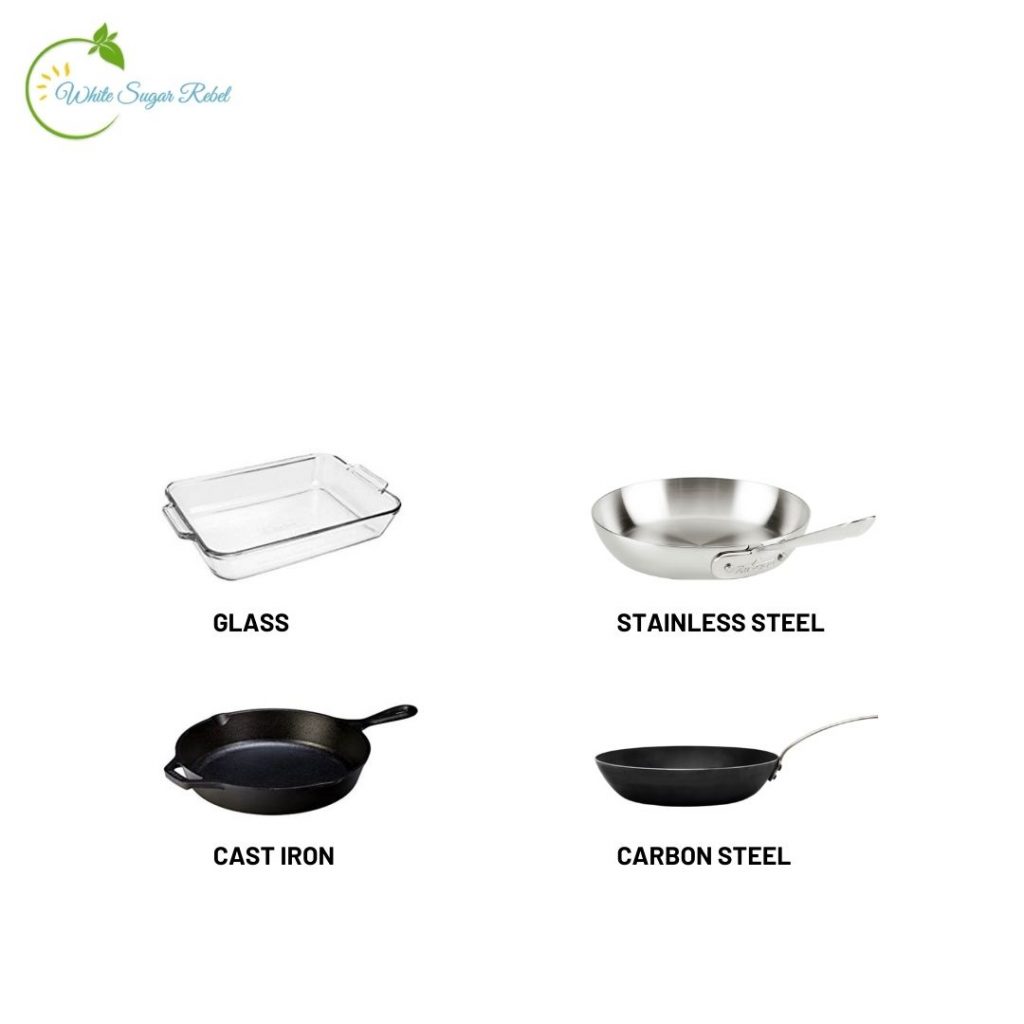
- Glass – Pyrex and Vision cookware
- Cast Iron – Lodge (seasoned with soybean oil) and Finex (uses flaxseed oil)
- Carbon Steel – Made-In
- Stainless Steel – see slides for options
Stainless Steel cookware is one of the safest you can use. Multiple metals are used to create stainless steel including iron, chromium, and nickel. These three metals can leach into food in small amounts. Iron and chromium are not very concerning in small amounts, but too much nickel can be. Nickel is used to strengthen and increase steel’s resistance to corrosion at high temperatures. Check the pictures for more information on how to select the least amount of nickel without compromising your cookware.
Since Stainless Steel is not a good conductor of heat, this is why aluminum or copper is used between the bonded layers. It is ok for stainless steel to contain aluminum between the bonded layers.
You get what you pay for with Stainless Steel, I really suggest buying one piece at a time if you cannot afford the set you really would like. It is always a good idea to alternate cookware.
Which cookware is your favorite? Share your comments below so we can all learn from your experience.
References:
https://www.imedpub.com/articles/a-followup-study-health-risk-assessment-of-heavy-metal-leachability-from-household-cookwares.pdf
https://www.cancer.org/cancer/cancer-causes/teflon-and-perfluorooctanoic-acid-pfoa.html
https://www.foodpackagingforum.org/news/nanoparticles-released-by-quasi-ceramic-pans
https://www.nontoxicforhealth.com/is-silicone-cookware-safe.htmlhttp://www.myhealth.gov.my/images/TypesofCookware(FSQ).pdf
https://www.cdc.gov/biomonitoring/pfoa_factsheet.html


